What the study evaluated
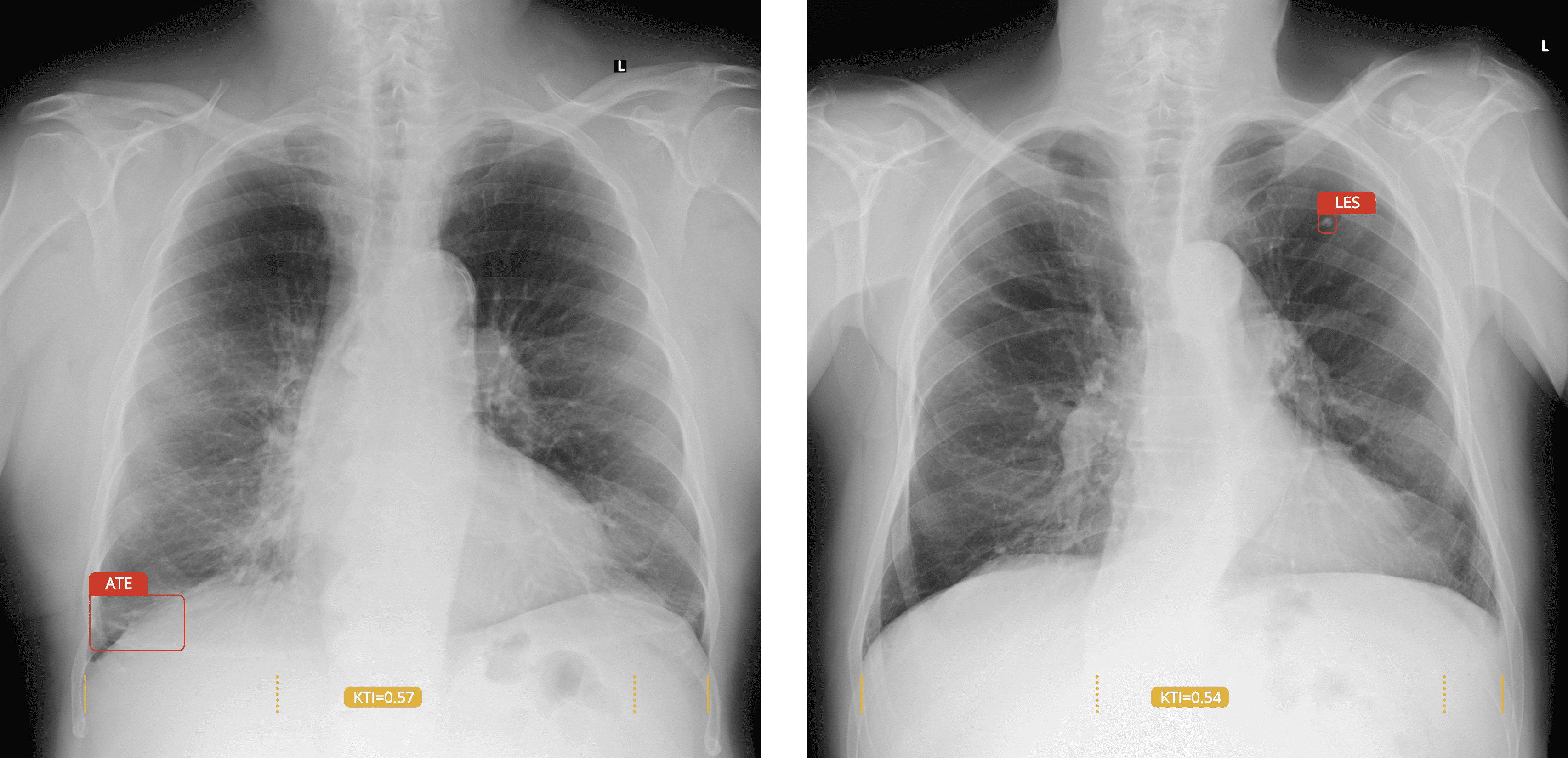
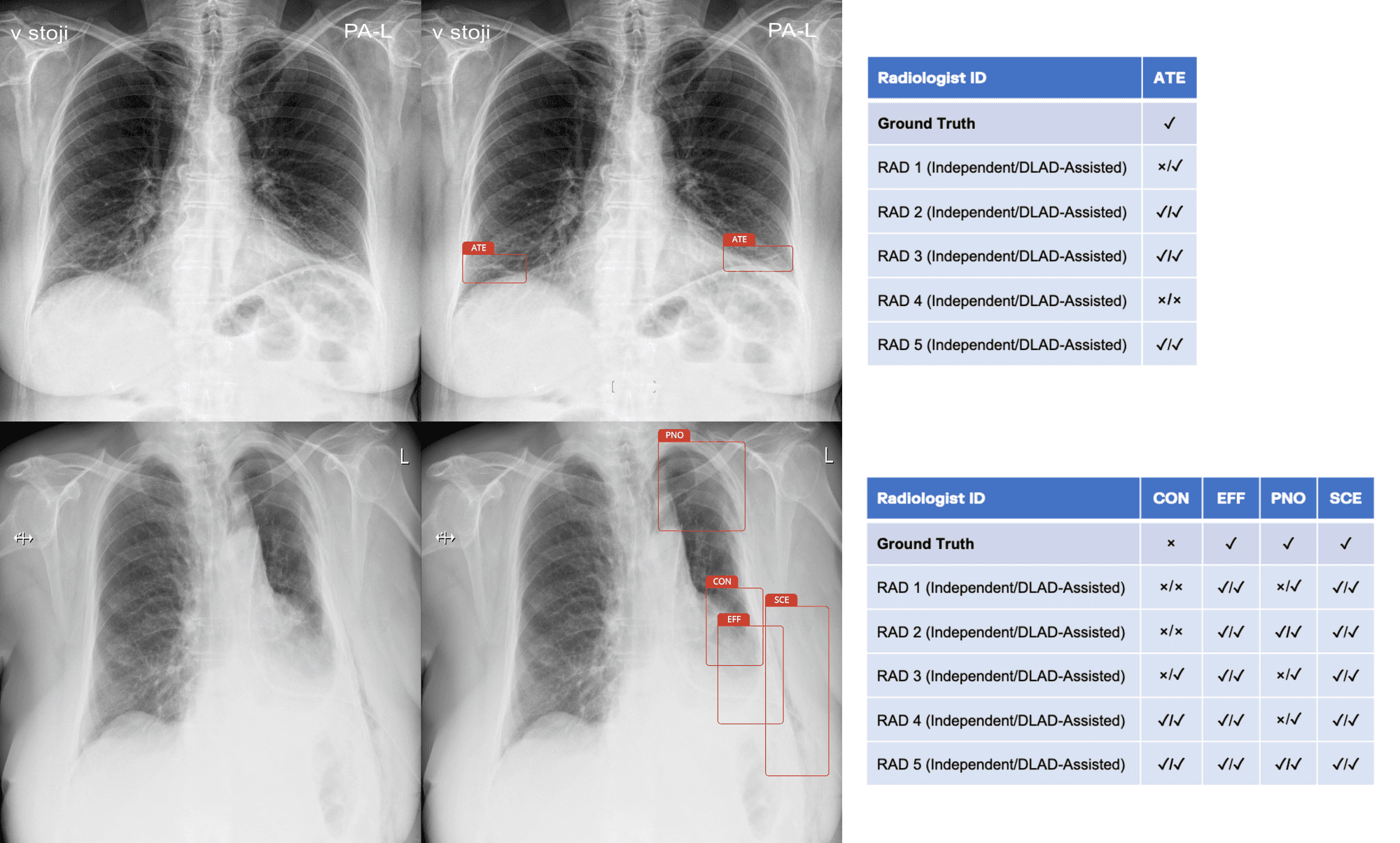
The study assessed the impact of the clinically deployed solution Carebot AI CXR on radiologists’ diagnostic performance in chest X-ray interpretation. Five radiologists independently reviewed 540 anonymized chest X-ray images in two phases—first without decision support and then with Carebot AI CXR assistance—separated by a washout period to minimize recall bias. The objective was to determine whether Carebot AI CXR improves diagnostic sensitivity for pulmonary pathologies without compromising specificity.
Study results in clinical practice
The results demonstrate that Carebot AI CXR significantly increases diagnostic sensitivity and reduces the risk of missed clinically relevant findings, while maintaining stable specificity. In clinical practice, this translates into a safer and more consistent diagnostic workflow, particularly in routine and high-workload settings. Carebot AI CXR functions as a reliable safety layer that supports radiologists’ expertise and helps standardize the quality of care across institutions.
Key numbers
Sensitivity increase: from 76% to 91% with Carebot AI CXR support
Stable specificity: 85% with and without AI assistance
Negative predictive value: increased from 81% to 94%, indicating a substantially lower risk of missed pathology
Abstract
The growing demand for chest radiography in healthcare, combined with radiologist shortages and increasing workloads, underscores the need for innovative diagnostic support tools. This crossover study evaluates the effect of commercially available deep learning-based automatic detection software (DLAD, Carebot AI CXR; Carebot s.r.o.) on radiologists' diagnostic performance in chest X-ray (CXR) interpretation. Five radiologists independently assessed a dataset of 540 anonymized CXRs, both independently and with DLAD assistance, in two phases separated by a 30-day washout period. DLAD assistance significantly improved diagnostic performance, with overall sensitivity increasing from 0.762 (95% CI: 0.705–0.811) to 0.911 (95% CI: 0.870–0.941, p < 0.001), while specificity remained unchanged at 0.850 (95% CI: 0.805–0.887, p = 1.000). The positive predictive value (PPV) slightly improved from 0.810 (95% CI: 0.755–0.856) to 0.836 (95% CI: 0.788–0.876, p = 0.331), and the negative predictive value (NPV) increased from 0.810 (95% CI: 0.763–0.850) to 0.941 (95% CI: 0.882–0.947, p < 0.001). These improvements were consistent across radiologists, with notable reductions in false-negative rates. The findings emphasize DLAD’s potential to standardize diagnostic accuracy, enhance sensitivity, and support radiologists in chest X-ray interpretation. These results highlight the clinical value of AI-assisted workflows in improving detection rates while maintaining specificity.