What the study evaluated
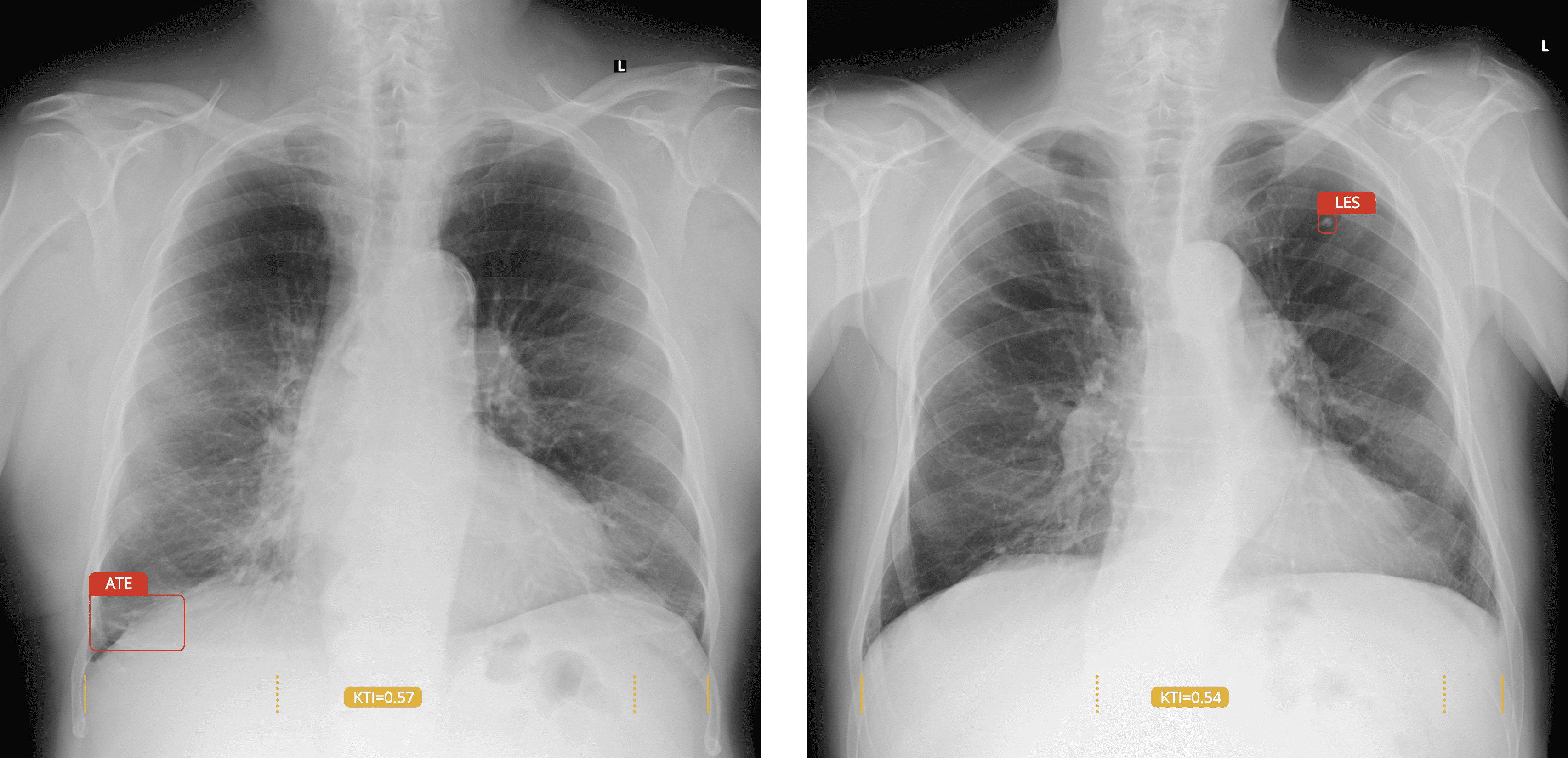
The study compared the time efficiency of three reporting approaches for low-risk chest X-rays: manual free-text reporting, template-based reporting, and AI-generated reporting using Carebot AI CXR. Three radiologists evaluated low-risk CXRs in a controlled crossover design, with reporting time measured for each method.
Study results in clinical practice
AI-generated reporting was the fastest method, significantly reducing reporting time compared to manual reporting and performing at least as efficiently as structured templates. In clinical practice, this enables faster handling of normal or low-risk CXRs and allows radiologists to focus more time on complex or abnormal cases. The study addresses efficiency only; diagnostic accuracy was not the primary endpoint.
Key numbers
Mean reporting time (manual): ~70–96 seconds per study
Mean reporting time (template-based): ~32–49 seconds per study
Mean reporting time (AI-generated): ~28–34 seconds per study
Average time reduction vs. manual:
Template-based: −54%
AI-generated: −63%
Statistical significance: reporting method significantly affected time (ANOVA p = 0.0008)
Abstract
Efficient and accurate chest X-ray (CXR) reporting is essential in radiology, especially for quickly identifying low-risk cases to prioritize more complex ones. This study investigates the time efficiency of three CXR reporting methods: manual, template-based, and AI-generated, focusing specifically on low-risk CXR evaluations in a radiology department. Results show that manual reporting, which requires free-text documentation, takes significantly longer than other methods, with average mean times per study of 96.4 seconds (RAD1), 91 seconds (RAD2), and 70.8 seconds (RAD3). In contrast, the structured, template-based approach reduced these times to 32.9 seconds (RAD1), 32 seconds (RAD2), and 48.8 seconds (RAD3), representing an average efficiency improvement of 53.93% compared to manual reporting. The AI-generated method yielded the shortest mean times per study at 27.7 seconds (RAD1), 31.9 seconds (RAD2), and 33.8 seconds (RAD3), with an average reduction of 62.82% compared to manual reporting. In conclusion, AI-generated reporting offers substantial time savings and maintains high accuracy, indicating strong potential to enhance radiology workflow efficiency. This study supports the integration of AI into routine CXR reporting, enabling radiologists to focus more on complex cases. Future research should explore the long-term impacts and further improvement of AI algorithms to optimize radiology practices.