What the study evaluated
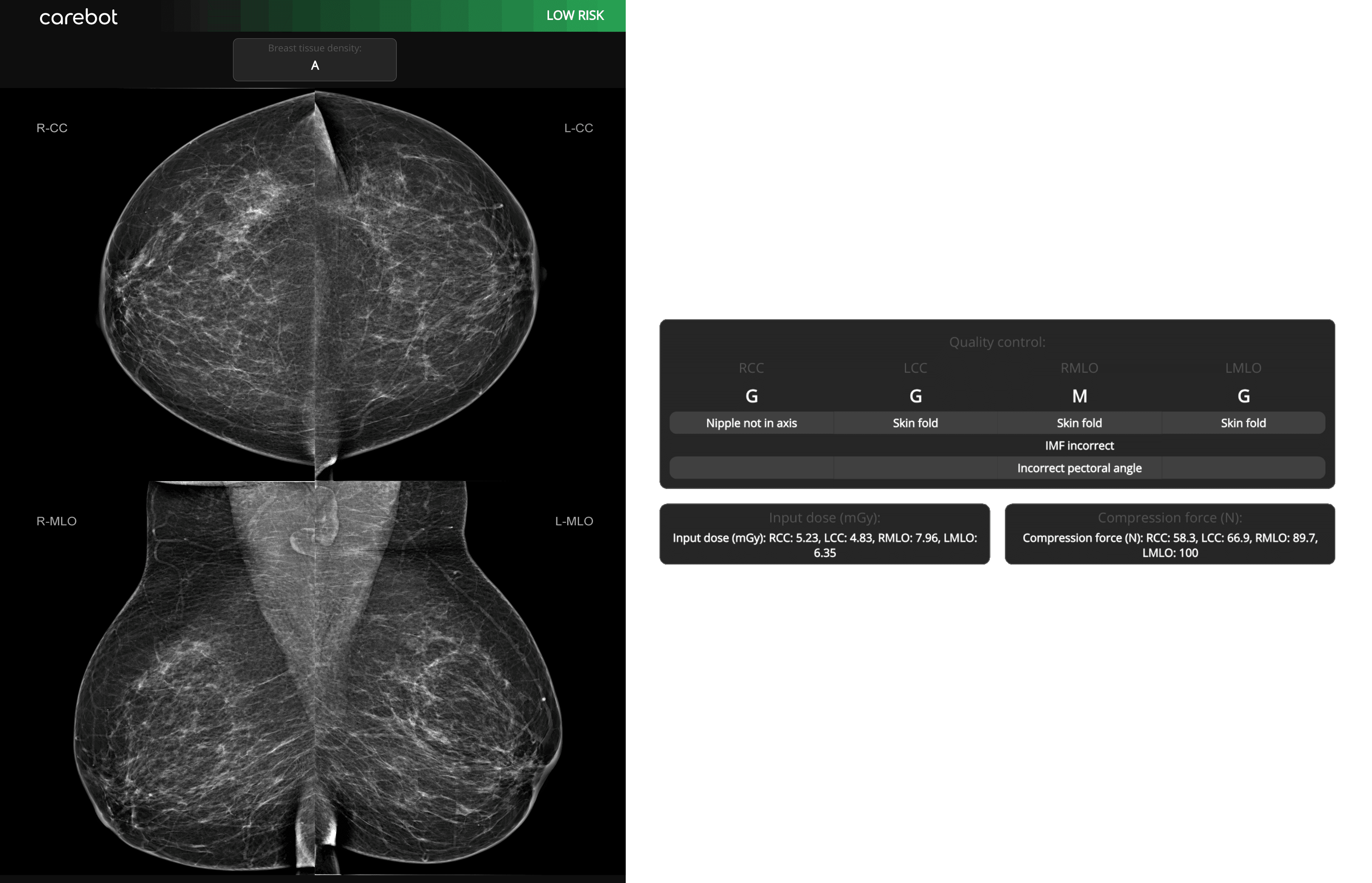
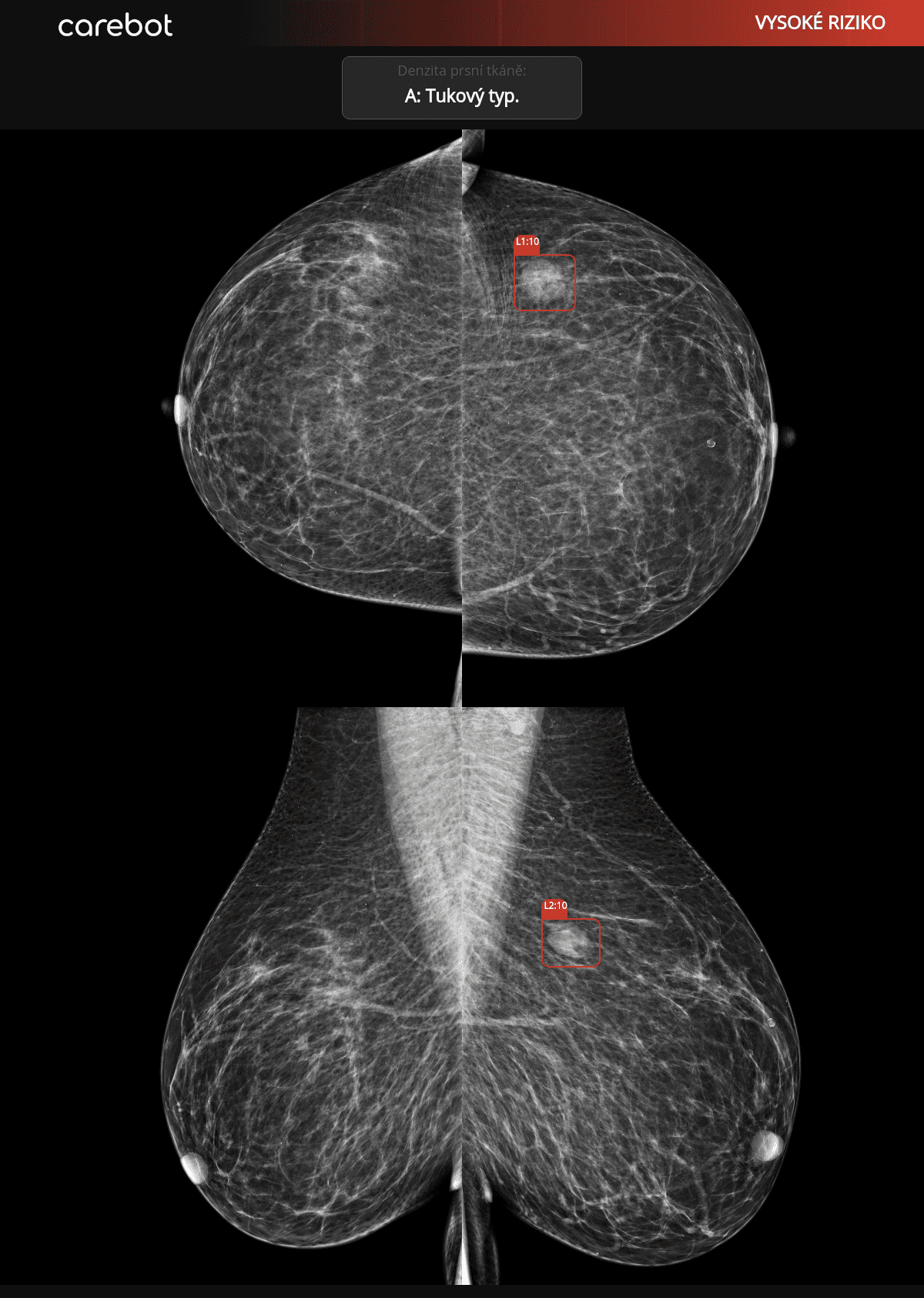
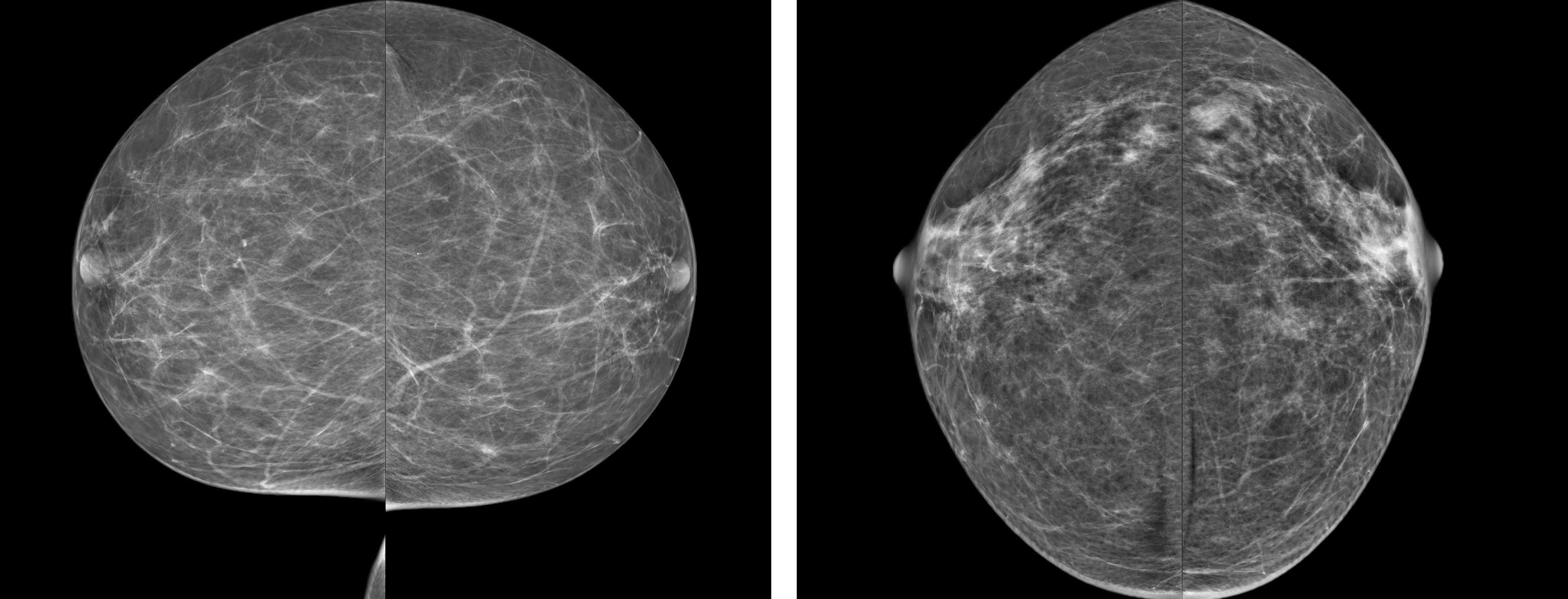
The study focused on the assessment of breast density on mammography images, which is an important risk factor for breast cancer. This evaluation is traditionally performed visually by radiologists using BI-RADS categories, with noticeable variability between readers. The objective of the study was to determine whether an AI system can automatically and reliably assess breast density at a level comparable to expert radiologist evaluation.
Study results in clinical practice
The AI algorithm achieved accuracy comparable to that of radiologists and in several cases outperformed individual readers. It also demonstrated higher consistency, with less variability across assessments. In clinical practice, this supports more standardized breast density evaluation, reduced subjectivity, and more reliable risk stratification within screening programs.
Key numbers
AI accuracy: 82%
Consistency with radiologists (Cohen’s κ): 0.71
AI performance: comparable to or better than individual radiologists
Abstract
The evaluation of mammographic breast density, a critical indicator of breast cancer risk, is traditionally performed by radiologists via visual inspection of mammography images, utilizing the Breast Imaging-Reporting and Data System (BI-RADS) breast density categories. However, this method is subject to substantial interobserver variability, leading to inconsistencies and potential inaccuracies in density assessment and subsequent risk estimations. To address this, we present a deep learning-based automatic detection algorithm (DLAD) designed for the automated evaluation of breast density. Our multicentric, multi-reader study leverages a diverse dataset of 122 full-field digital mammography studies (488 images in CC and MLO projections) sourced from three institutions. We invited two experienced radiologists to conduct a retrospective analysis, establishing a ground truth for 72 mammography studies (BI-RADS class A: 18, BI-RADS class B: 43, BI-RADS class C: 7, BI-RADS class D: 4). The efficacy of the DLAD was then compared to the performance of five independent radiologists with varying levels of experience. The DLAD showed robust performance, achieving an accuracy of 0.819 (95% CI: 0.736–0.903), along with an F1 score of 0.798 (0.594–0.905), precision of 0.806 (0.596–0.896), recall of 0.830 (0.650–0.946), and a Cohen’s Kappa (𝜅) of 0.708 (0.562–0.841). The algorithm achieved robust performance that matches and in four cases exceeds that of individual radiologists. The statistical analysis did not reveal a significant difference in accuracy between DLAD and the radiologists, underscoring the model’s competitive diagnostic alignment with professional radiologist assessments. These results demonstrate that the deep learning-based automatic detection algorithm can enhance the accuracy and consistency of breast density assessments, offering a reliable tool for improving breast cancer screening outcomes. Kvak, D., Biroš, M., Hrubý, R., Dandár, J., Janů, E., & Atakhanova, A. (2024). Human-LevelComputer-Aided Approach for BI-RADS Breast Density Classification: Multi-Reader, Multi-Centric Study. European Congress of Radiology 2024, Vienna.