What the study evaluated
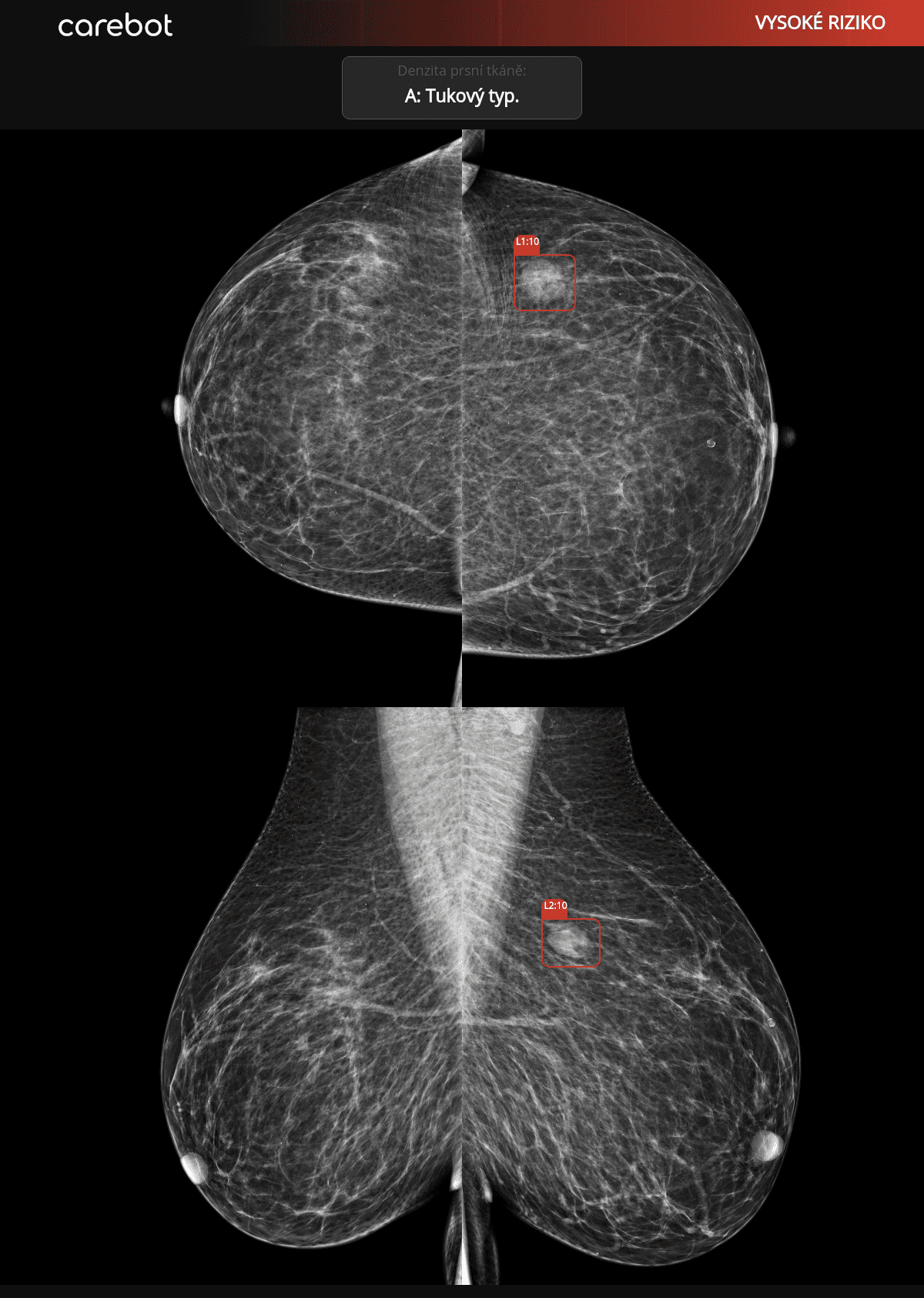
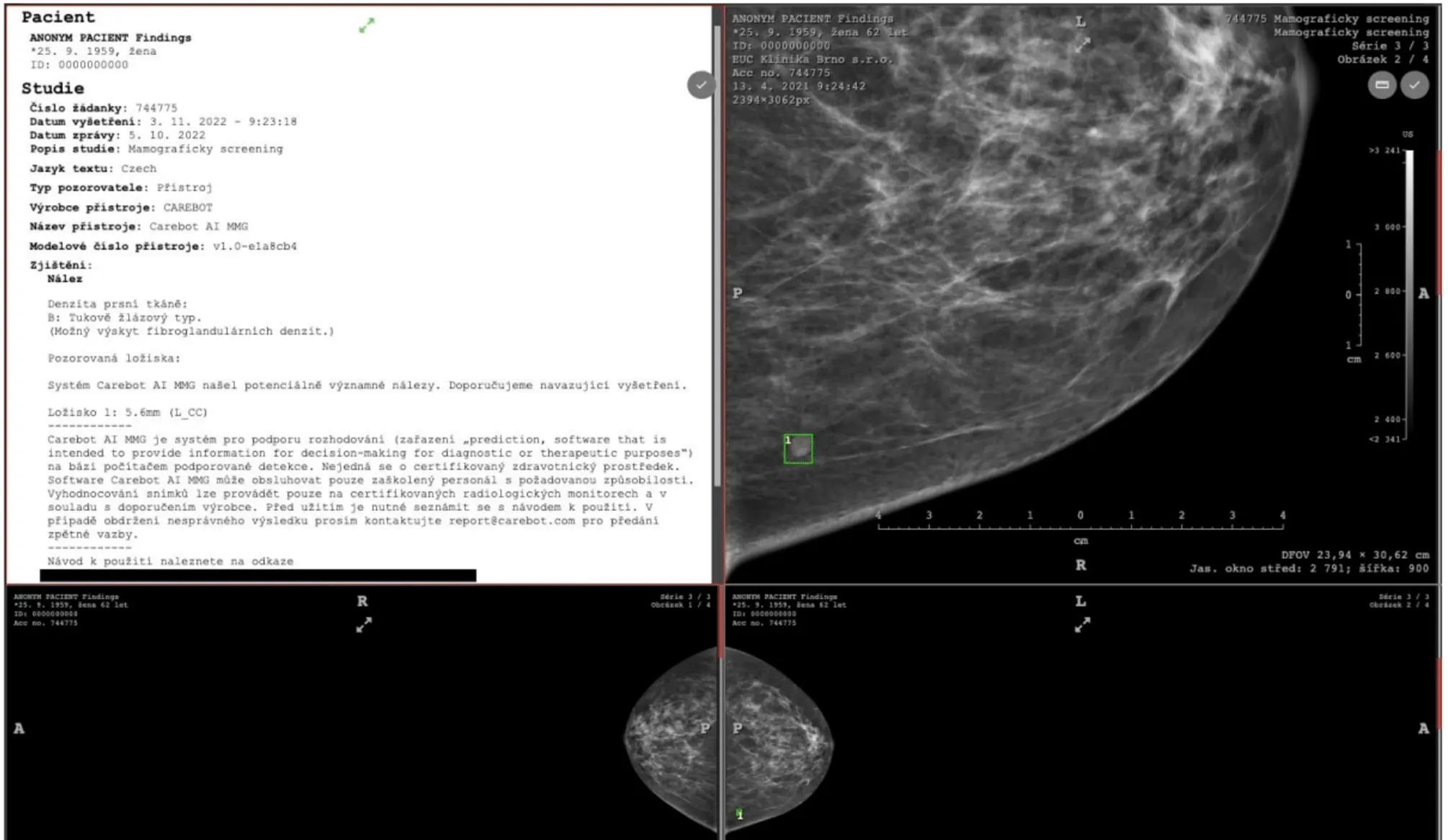
This study evaluated a deep learning-based automatic detection and segmentation system (Carebot AI MMG v1.0) for identifying suspicious breast lesions on digital mammograms. The algorithm was directly implemented into PACS (Picture Archiving and Communication System) and its performance was validated on the INbreast dataset, comparing AI outputs with radiologist-level annotations to assess its feasibility as a decision-support tool.
Study results in clinical practice
AI achieved a high sensitivity for detecting breast lesions, indicating a low rate of missed findings, while maintaining a reasonable false-positive rate. Sensitivity was higher than specificity, which suggests the model is effective at flagging potential lesions for radiologist review. In clinical practice, this means the system can help radiologists detect subtle mammographic abnormalities early, acting as a triage and alert tool integrated into routine workflow.
Key numbers
Abstract
Breast cancer is one of the most prevalent forms of cancer affecting women. Detection of suspicious lesions on mammographic images is considered a challenging task due to the variability of lesion size sand shapes, the problematic margins of the findings, and some extremely small lesions that are difficult to localize. With the increasing availability of digitized clinical archives and the development of complex deep learning (DL) methods, we are witnessing a trend towards the integration of robust computer-aided detection (CAD) systems to assist in the automatic segmentation of lesions on mammograms to aid in the diagnosis of breast cancer. This study presents deep learning–based automatic detection algorithm (DLAD), directly implemented in picture archiving and communication system (PACS) to aid in improving the radiologist’s workflow. The proposed DLAD is evaluated on INbreast dataset with a sample size of n=138 (71 [51.45%] BI-RADS 4/5/6 images, 67 [48.55%]BI-RADS 1 images). Preliminary results show a sensitivity of 0.9296 [95%CI 0.8701-0.9891], specificity of 0.7273 [0.6207-0.8339] and IoU of 0.5661, indicating a low false negative rate while maintaining a reasonable false positive rate.