Lung cancer is usually found too late. Carebot shows what changes when AI helps catch it early. Three real cases reveal how small, easily missed findings turned into life changing diagnoses.
On World Cancer Day, Carebot and its partners drew attention to the importance of early lung cancer detection. The goal was to show the real clinical value of timely diagnosis supported by Carebot AI.
To make the impact tangible, three real cases were selected in which artificial intelligence helped identify subtle lung lesions that later proved to be malignant.
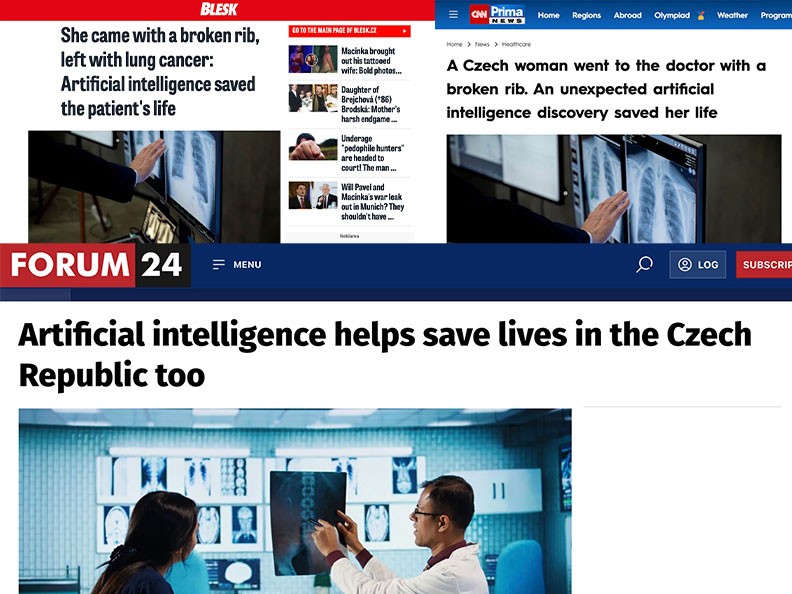
She came with a broken rib and left with a life changing diagnosis
A seventy three year old woman came to the emergency department after a fall. The X ray confirmed a rib fracture. Carebot AI also flagged a subtle lung finding unrelated to the injury.
Follow up CT confirmed early stage lung cancer. The patient had no symptoms and no reason to suspect a serious disease. The tumor was found at a stage when treatment was still highly effective. Without the AI alert, the finding would likely have been missed.
The tumor was located close to major blood vessels. Early diagnosis made timely surgery possible and significantly improved the patient chances of recovery, says MUDr. Pavel Špás.
What the collaboration has already achieved
Since 2025, Carebot and Bristol Myers Squibb have achieved measurable results:
almost 140000 chest X rays analyzed
1077 patients referred for further diagnostic workup
67 first time lung cancer diagnoses
nearly 300 malignant findings identified overall, often at earlier stages than usual
Earlier detection in these cases directly changed treatment options and prognosis.
The X ray looked normal but it was not
A fifty year old man regularly attended preventive chest X rays. Both the pulmonologist and radiologist described the scan as normal. Carebot AI detected a subtle change compared to previous images and recommended further testing.
CT later confirmed early stage lung cancer. The finding was small and easy to miss in routine practice. AI worked as a second reader that reduced the risk of oversight.
In daily practice, even clear findings can be missed. AI helps reduce that risk, says the physician involved.
When the human eye is unsure AI raises a flag
In a forty year old patient, a small abnormality on an X ray was initially considered an imaging artifact. Carebot AI marked the area as suspicious.
Months later, follow up imaging confirmed a malignant tumor.
AI rarely misses real findings but sometimes flags borderline ones. If AI finds nothing, my confidence increases. If it flags something uncertain, I become more cautious, says MUDr. Pavel Špás.