What the study evaluated
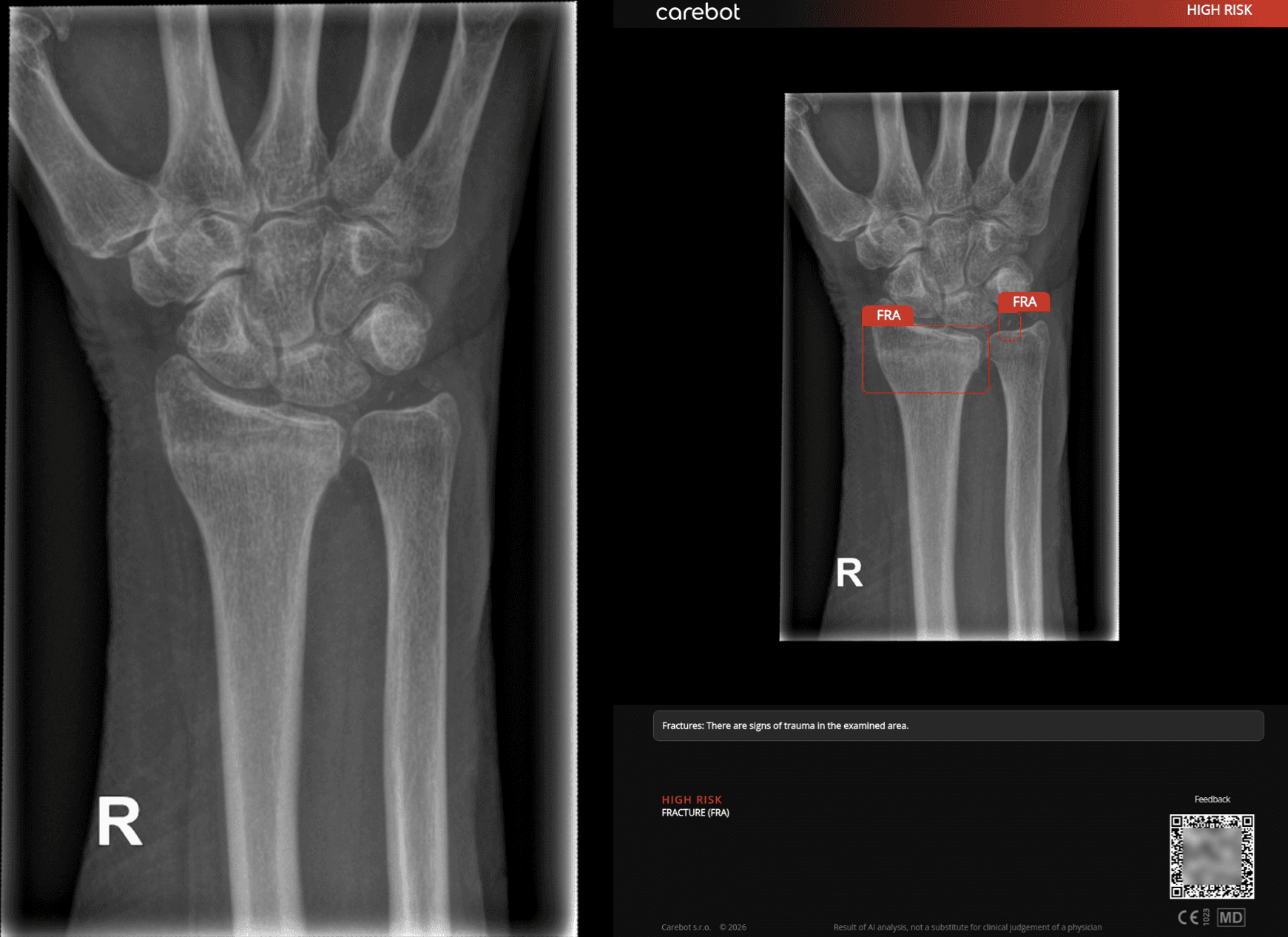
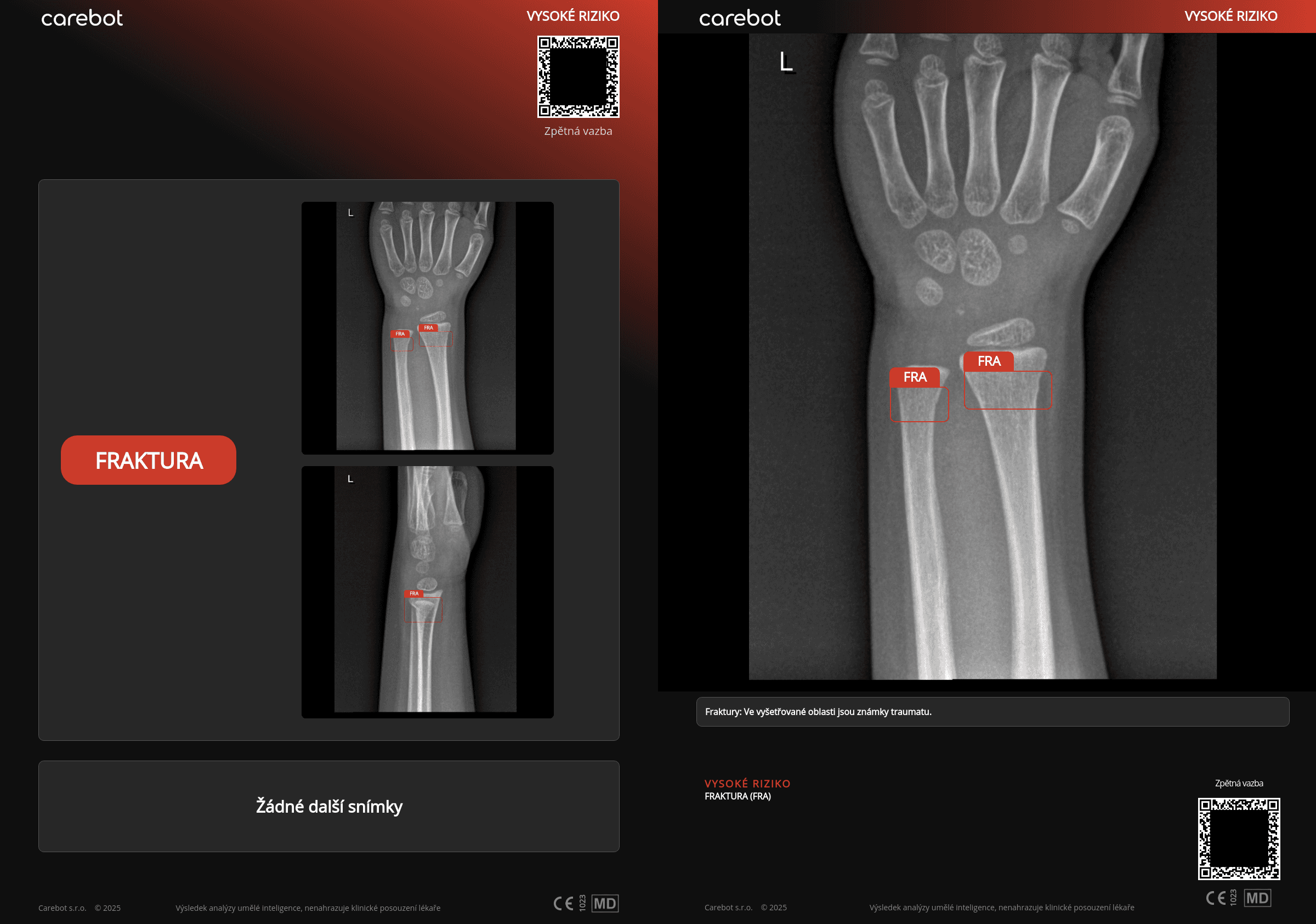
The study evaluated the clinical performance of Carebot AI Bones for detecting fractures on digital X-rays of the appendicular skeleton.
The meta-analysis included three independent retrospective validation studies conducted at Nemocnice Frýdek-Místek, Nemocnice Šumperk, and Fakultní nemocnice Olomouc. In total, 2,133 X-ray images were analyzed, including 302 fracture-positive cases.
The main objective was to determine whether the pooled sensitivity and specificity of Carebot AI Bones exceeded the predefined clinical performance thresholds for fracture detection.
Study results in clinical practice
Carebot AI Bones demonstrated consistent fracture detection performance across all three hospitals. The pooled sensitivity was 0.915, and the pooled specificity was 0.923, with no detectable heterogeneity between studies.
In practice, this supports the use of Carebot AI Bones as a second-reading decision-support tool in emergency and outpatient radiology. The results indicate that the system can help detect fractures reliably while maintaining an acceptable false-positive rate across different clinical environments.
Key numbers
Studies included: 3 retrospective validation studies
Hospitals: Nemocnice Frýdek-Místek, Nemocnice Šumperk, Fakultní nemocnice Olomouc
Total X-rays analyzed: 2,133
Fracture-positive cases: 302
Overall fracture prevalence: approximately 14.2%
Pooled sensitivity: 0.915
95% CI for sensitivity: 0.877-0.942
Pooled specificity: 0.923
95% CI for specificity: 0.910-0.934
Heterogeneity: I² = 0% for both sensitivity and specificity
Performance criteria: met, with sensitivity and specificity above 0.90 and lower 95% CI bounds above 0.85
Abstract
Fractures are among the most common musculoskeletal injuries, and a proportion of fractures may remain undetected during initial X-ray interpretation. Artificial intelligence can support radiologists by acting as a second reader and reducing the risk of missed findings. This meta-analysis evaluated the clinical performance of Carebot AI Bones, a CE-marked medical device for fracture detection on digital X-rays of the appendicular skeleton. The analysis included three independent retrospective studies performed in Czech hospitals, with a total of 2,133 X-ray images and 302 fracture-positive cases. Reference standards were established by expert consensus in each study. The pooled sensitivity of Carebot AI Bones was 0.915 with a 95% confidence interval of 0.877-0.942, and the pooled specificity was 0.923 with a 95% confidence interval of 0.910-0.934. Results were consistent across centres, with I² = 0%, indicating no detectable between-study heterogeneity. Both sensitivity and specificity exceeded the predefined clinical performance threshold of 0.90, and the lower confidence limits remained above the non-inferiority threshold of 0.85. These findings confirm robust and transferable performance of Carebot AI Bones across different clinical settings and support its use as a decision-support tool for fracture detection in emergency and outpatient radiology.